Introduction
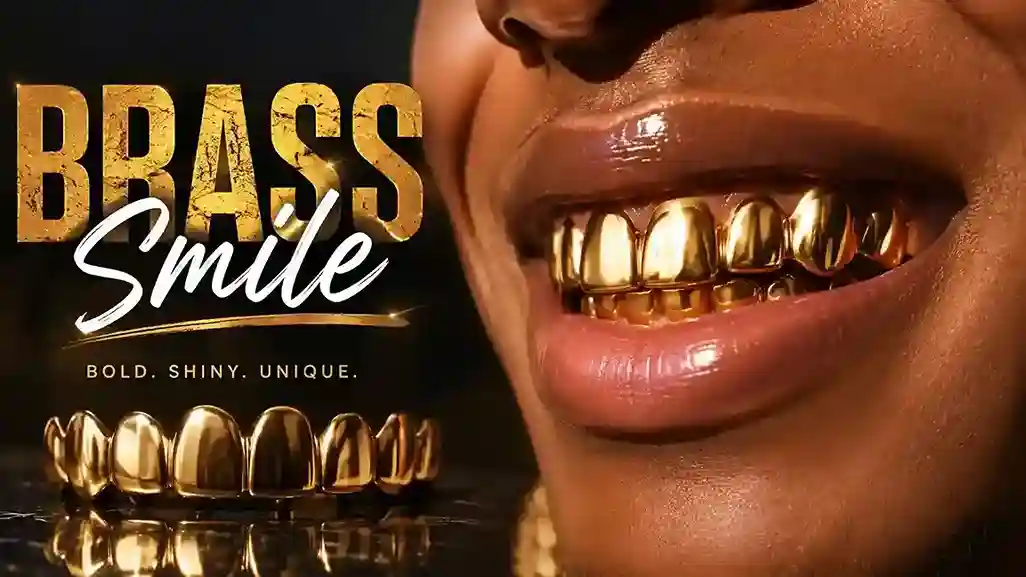
You want the flash of gold without emptying your bank account. That desire leads straight to the brass smile. Walking down the jewelry aisle or scrolling through social media, the warm, golden glint of a brass dental accessory catches your eye instantly. It promises streetwear status and a bold aesthetic for a fraction of the price. But there is a sharp edge behind that shine you need to understand before it touches your enamel. This guide strips away the marketing fluff to show you exactly what a brass smile means for your health, your wallet, and your personal style.
Brass Smile Customization Options & Key Characteristics
Before you commit to the look, understanding the base material changes everything. Brass is not a pure metal; it is an alloy. The composition of your brass smile directly impacts how it feels, wears, and interacts with your body. Use this breakdown to compare your options based on the metal mix.
| Feature | Low-Grade Brass (Yellow Brass) | Polished Brass (Cartridge Brass) | Comparison to Gold (For Context) |
| Composition | ~67% Copper, 33% Zinc | ~70% Copper, 30% Zinc (with trace elements for machinability) | Pure gold (24k) or alloyed (10k-18k) with silver/palladium. |
| Visual Hue | Muted mustard yellow. Prone to rapid darkening. | Bright, mirror-like golden finish when new. | Rich, buttery luster that never tarnishes or oxidizes green. |
| Wearer Risk | High. Excess copper yields a metallic taste and green staining on gums/teeth. | Medium. Smoother surface resists plaque but still reacts with saliva acids. | None. Biocompatible, hypoallergenic, and non-reactive in the mouth. |
| Durability | Soft, scratches deeply, and bends easily under bite pressure. | Harder, keeps a shape better but becomes brittle over time with heat and moisture. | Malleable but exceptionally durable; resistant to corrosion from oral fluids. |
| Typical Use | Decorative eyelets, costume jewelry. Never safe for prolonged mucosal contact. | Budget-friendly “street grillz” often sold online without safety disclosures. | Permanent dental crowns, bridges, and high-end removable grillz. |
The Metallurgical Reality Behind a Brass Smile
Choosing a brass smile means picking a copper and zinc alloy. This fundamental chemistry dictates everything about the wearing experience. Unlike inert precious metals, brass actively reacts with the warm, acidic, and bacteria-rich environment of the human mouth. Dental professionals consistently warn against placing reactive base metals against living tissue for extended periods. The warm glow you admire on a shelf behaves very differently when it meets your saliva.
Dr. Michael T. Davis, a general dentist practicing restorative cosmetic dentistry, explains the immediate physiological response: “When you put a base metal alloy like standard yellow brass in the mouth, you’re starting a chemical reaction, not just wearing a decoration. Saliva acts as an electrolyte, instantly initiating galvanic corrosion. This releases metal ions directly into the soft tissues of your cheeks and gums, causing localized inflammation and that distinct metallic taste patients often report.”
Understanding the specific alloy number matters. C260 (cartridge brass) offers a smoother polish than C268, but no brass alloy achieves the biological indifference required for safe, all-day mucosal contact. The alloy corrodes microscopically, leaching compounds that can permanently pigment porous dental enamel gray or black.
Brass Smile vs. Gold Grillz: A Sensory and Health Breakdown
Gold dominates permanent dentistry for a reason. Pure gold and high-karat alloys remain completely stable inside the body. A brass smile, by comparison, introduces volatility. While 14-karat or 18-karat gold grillz cost significantly more upfront, they do not corrode, stain gum tissue green, or trigger electrical shocks when touching a metal fork or aluminum foil. This oral galvanism—a sharp, painful zap caused by dissimilar metals in saliva—happens frequently with brass accessories. Gold remains an insulator against this phenomenon; brass actively conducts it.
Beyond comfort, bacterial adhesion differs drastically. Gold’s non-porous, non-reactive surface naturally repels plaque buildup. Microscopically pitted brass, however, offers a breeding ground for Streptococcus mutans bacteria. You get the look of luxury alongside a dramatically increased risk of halitosis and interproximal cavities where the metal touches the tooth neck.
The Hidden Danger: Green Tongue and Gum Staining
A visible tell of a reactive brass smile emerges within hours of wear. Saliva, slightly acidic, dissolves the copper element at the alloy’s surface. These oxidized copper compounds—chemically similar to the verdigris patina on old statues—deposit directly into the filiform papillae of your tongue and the porous gum tissue. This creates a startling black-green or teal stain that scrubbing cannot immediately remove. The staining signals active metal breakdown and ion migration into your mucous membranes. While the discoloration itself eventually fades after you stop wearing the piece, repeated exposure causes the pigment to embed deeper into the gingival sulcus, potentially leading to a permanent “amalgam tattoo” appearance requiring laser correction by a periodontist.
Recognizing a High-Quality Metal Allergic Reaction
A brass smile introduces a cocktail of potential allergens directly onto highly absorbent tissue. Copper, while essential in trace dietary amounts, acts as a potent surface irritant in concentrated ionic form. Zinc, used to strengthen the alloy, triggers contact dermatitis and lichenoid reactions in sensitive individuals. These reactions mimic other oral pathologies, making diagnosis tricky. Watch for a burning sensation that starts exactly where the brass touches the inner lip, followed by tiny fluid-filled vesicles or white, lacy streaks (Wickham striae) on the cheek lining. This is not a minor sensitivity—it’s an immune response. Nickel, often an undeclared trace contaminant in cheap imported brass, causes the most aggressive type IV hypersensitivity, leading to significant tissue sloughing. Remove the brass immediately if you feel any texture change on your inner cheeks.
Why the “Fool’s Gold” Analogy Fits Modern Grillz
The old prospector’s term for pyrite applies perfectly to unregulated brass dental jewelry. Brass mimics the initial glow of 10-karat gold under specific boutique lighting but reveals its true nature within a single weekend of wear. A brass smile relies entirely on a superficial polish that the mouth’s chemistry rapidly dulls. While gold’s value remains stable and its surface bright, brass requires constant abrasive polishing with toxic compounds like Brasso, which should never re-enter a human mouth. The cycle traps you: polish away the tarnish, reintroduce chemical residue, repeat. Investing in gold-filled or solid gold stops the decaying cycle entirely.
Protective Coatings: Fact or Dangerous Fiction?
Some custom shops market a “sealed” brass smile with a clear polymer barrier to prevent direct lip and gum contact. The harsh reality of the oral biome quickly defeats this solution. Salivary enzymes (amylase) and the constant micro-abrasion of chewing degrade these medical-grade coatings within weeks. Once a pinhole breach occurs, oral fluids wick underneath the barrier, trapped against the raw brass with zero oxygen flow. This creates an anaerobic pocket that accelerates highly acidic, corrosive pitting out of sight. The wearer believes they have a safe product while a bacterial and chemical stew concentrates unseen against their enamel. Authoritative dental labs like those certified by the National Association of Dental Laboratories strictly avoid coating base metals for intraoral use due to these predictable failure modes.
Mastering the Short-Term Wear Protocol
If you choose a brass smile purely for a 15-minute music video shoot or a quick photo session, strict harm-reduction steps are non-negotiable. The goal is zero ion transfer during that brief window. Start by creating a physical moisture barrier. Carefully dry the teeth and apply a thin layer of petroleum jelly or a silicone-based dental dry-angle gel precisely where the brass touches the gum line and teeth. Place the brass grillz with a single smooth motion—never snap them on, as this scratches enamel.
The timer starts immediately. Remove them within 15 minutes to halt the electrolytic reaction. Upon removal, vigorously rinse the mouth with plain water, then with a fluoride mouthwash to neutralize surface acids. Brush the enamel areas that contacted the brass gently with a high-density nano-hydroxyapatite toothpaste to physically bind and remove any trace copper ions before they penetrate the enamel rods. Never sleep, eat, or drink anything but cool water during the brief wear window.
Eco-Friendly and Non-Toxic Custom Alternatives
Achieving the high-impact golden aesthetic without the biological penalty requires looking toward modern metallurgy and ceramics. Solid titanium coated with titanium nitride (TiN) provides a brilliant, permanent gold hue through a physical vapor deposition process. This ceramic-like coating proves harder than steel and entirely inert inside the body. Dental-grade cobalt-chrome, while white-silver, can accept a durable gold-tone ion plating without introducing copper or nickel.
A research team at the Fraunhofer Institute for Manufacturing Technology and Advanced Materials notes, “Modern TiN coatings provide a wear-resistant, chemically inert golden finish ideal for biomedical applications.” For a non-metallic path, digitally milled dental ceramic (like lithium disilicate) shaded in an intense A4 or “sun gold” high-translucency block by a CAD/CAM designer offers a fully biocompatible, lightweight, and stain-proof smile accessory. These materials cost more than brass but far less than gold while avoiding 100% of the corrosion risk.
Cleaning Chemistry That Actually Neutralizes Tarnish
You cannot use standard jewelry cleaner on a brass mouthpiece and eat safely afterward. The cleaning protocol requires a food-safe acid that attacks the oxidation (copper oxide) without leaving a toxic film. Create a clean, glass-only workspace. Combine distilled white vinegar (5% acetic acid) with a tablespoon of pure, non-iodized sodium chloride. Submerge the brass for exactly three minutes. This brief acidic bath dissolves surface tarnish but begins to etch the metal if left too long. Remove the piece, rinse under filtered water, and immediately neutralize the acid by dipping in a saturated baking soda solution. Scrub gently with a soft, new toothbrush dedicated only to this task. After drying, a microcrystalline museum wax, applied and buffed, provides a temporary, food-safe hydrophobic seal for the next short-term wear. Never soak brass overnight.
The Dental Technologist’s View on Enamel Erosion
The interface where a brass smile meets the biting edge of your incisors acts as a micro-abrasion point. Every jaw movement, even talking, causes micron-scale friction. Brass, with a Mohs hardness around 3, seems softer than enamel (Mohs 5), but the copper oxide corrosion products that form on the surface achieve a higher hardness close to 4, mixed with abrasive oral debris. This creates a sandpaper-like slurry that grinds away the prismatic enamel structure with each micromovement. Over time, the tooth loses its protective contour, creating a shelf where bacteria thrive. Dental technicians see a signature wear pattern on anterior teeth of chronic brass grillz wearers: a flat, shiny facet exactly matching the internal edge of the metal cap. This structural damage is permanent and requires composite bonding or veneers to restore.
Sourcing Ethics and Metal Purity Testing
A brass smile priced at $29.99 online typically arrives from unregulated supply chains. A recent report by the Environmental Health Perspectives journal highlighted excessive lead and cadmium levels in low-cost metallic jewelry items, components added to lower the melting point during casting but highly neurotoxic. You must test any brass item entering your mouth. A consumer-grade 3M LeadCheck swab reacts to accessible lead on the surface, but deeper toxic metals remain hidden. The genuine article for safe oral placement comes with a mill certification document tracing the alloy composition from the foundry. X-ray fluorescence (XRF) analyzers, available at some precious metal exchanges and university geology departments, provide a non-destructive elemental breakdown in under a minute, revealing hidden cadmium, arsenic, or antimony contamination. A high-quality brass smile must start with certified, contaminant-free alloy chemistry.
Permanent Dental Art: Moving Beyond Removable Caps
For those committed to a permanent golden aesthetic on one or two teeth, direct oral brass is never the answer. The safe pathway involves a dentist in restorative cosmetic dentistry placing a high-noble gold alloy crown. These alloys, specified by the American Dental Association, must contain at least 60% noble metal (gold, platinum, palladium) with at least 40% gold.
This non-reactive metal completely encapsulates the prepared tooth, fitting the gum margin within microns. A dental ceramist can even tint a pressed ceramic crown with a rich, warm golden internal stain covered by transparent porcelain, achieving the visual pop of a brass smile with the biocompatibility of medical-grade materials. This permanent solution protects the underlying tooth from decay while delivering a lasting, safe shine.
Frequently Asked Questions
Can a brass smile permanently damage my gums?
Yes, through chronic irritation. Prolonged contact with copper ions triggers inflammation and a bluish-green gingival tattoo. This deep pigment deposit within the connective tissue requires surgical excision or laser therapy to resolve completely.
Why does my brass grillz taste like a battery?
The acidic saliva triggers galvanic corrosion. This chemical reaction between the copper and zinc alloy in your brass smile creates a small electrical current, releasing metallic ions you perceive as a sharp, bitter battery-like taste.
How long can I safely keep a brass smile in my mouth?
Less than 15 minutes. Any longer and the salivary electrolytes begin dissolving the copper content. This brief window minimizes ion leaching and the risk of acid erosion under the metal cap.
What is the safest way to make a brass smile fit my teeth?
Use a dental alginate impression poured in lab stone for a precise, passive fit that avoids pressure points. Never bend a brass smile with pliers once in your mouth—this creates sharp micro-fractures in the metal that lacerate gum tissue.
Does clear nail polish make a brass grillz safe?
Absolutely not. The oral biome breaks down nail polish rapidly, releasing volatile organic compounds like toluene and formaldehyde directly onto the mucous membranes while trapping bacteria underneath the breached coating.
Can I eat vegan or raw food with a brass smile?
No. Raw fruits, vinaigrettes, and citrus dressings contain weak acids (citric, acetic, malic) that aggressively accelerate copper leaching from the brass, turning the metal surface sticky and pitted almost instantly.
Conclusion
A brass smile delivers an undeniable aesthetic punch, but it comes wrapped in biological risk that you now fully understand. You no longer have to gamble with green stains, electrical zaps, or permanent gum tattoos just to express your style. True authority on this look means recognizing that pure gold, titanium nitride ceramics, or gold-tone dental porcelain all provide the exact warm-gold flash with zero toxicity. Your smile—the living tissue, the enamel, the first thing people see—deserves the kind of care that budget alloys strip away.
Take the next step by visiting a local cosmetic dental specialist who can discuss custom, non-reactive permanent golden grills, or explore a dental lab’s gold-accented ceramic design program. Your grin should stop traffic, not contaminate your body. Make the hard pivot to biocompatible brilliance today.