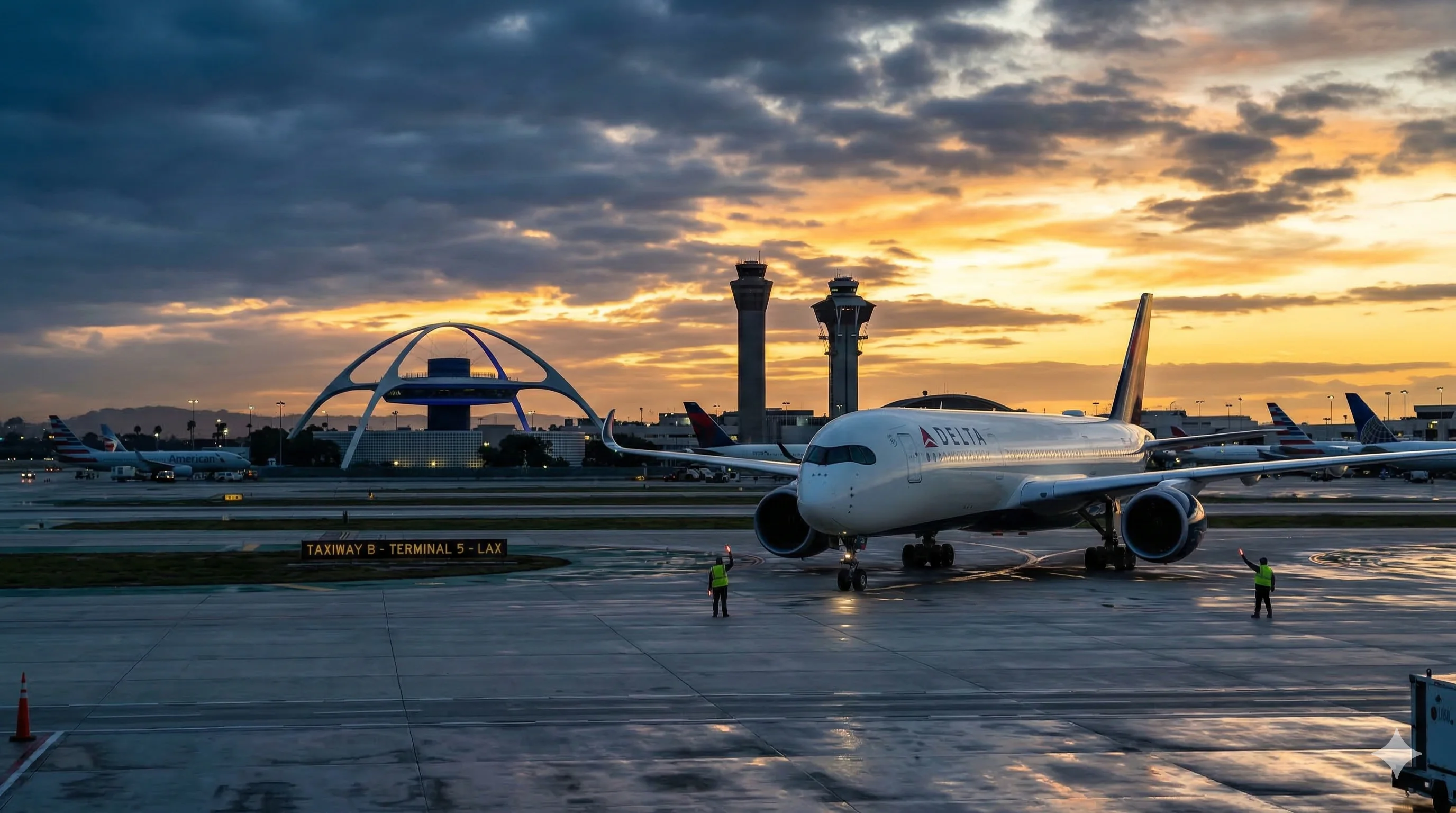
Delta Flight DL275 Diverted to LAX
What Really Happened on May 27, 2025
On May 27, 2025, Delta Flight DL275 became one of the most discussed aviation incidents of the year—not because of catastrophe, but because of a decision that perfectly illustrates modern aviation safety in action. The Airbus A350-900, carrying passengers from Detroit to Tokyo, spent nearly 12 hours in the air only to land 5,000 miles from its intended destination, touching down at Los Angeles International Airport instead of Tokyo Haneda.
This wasn’t a failure. It was a textbook example of precautionary decision-making that kept 200-plus passengers safe while disrupting their travel plans in the most responsible way possible.
Understanding the Route: Why This Flight Matters
Delta Flight DL275 operates one of the most challenging routes in commercial aviation. The Detroit-to-Tokyo corridor spans approximately 6,400 miles across the North Pacific, pushing the limits of aircraft range and crew endurance. Flights like this require meticulous planning because once you’re three hours west of Alaska, your options for landing become severely limited.
The North Pacific presents unique operational challenges:
- Limited diversion airports: Between Alaska and Japan, suitable alternate airports are scarce
- Extreme weather variability: Temperatures at cruising altitude regularly drop below -50°C (-58°F)
- Fuel requirements: Long-haul flights carry substantial fuel loads that affect landing performance
- Crew fatigue management: Ultra-long flights push against duty time regulations
When something goes wrong on a route like this, pilots can’t simply “wait and see.” The geography demands early, conservative decision-making.
The Anti-Ice System: A Critical Component
The technical issue that triggered the diversion involved the engine anti-ice system—a component most passengers never think about but one that becomes absolutely essential during high-altitude flight.
How Engine Anti-Ice Systems Work
Modern jet engines operate in brutally cold environments. At 35,000 feet, ambient temperatures routinely reach -50°C to -60°C. In these conditions, ice can form on engine inlet surfaces, disrupting airflow and potentially causing:
- Compressor stalls
- Engine surge events
- Reduced thrust availability
- Physical damage to engine components
The anti-ice system prevents this by using heated bleed air from the engine to warm critical surfaces. Think of it as a sophisticated heating system that keeps the engine’s “front door” clear of ice accumulation.
Why the Warning Mattered
During DL275’s westbound journey, cockpit monitoring systems detected irregular readings from this protective system. The aircraft remained fully controllable—this wasn’t an engine failure or emergency situation. However, the irregularity created an unacceptable risk profile for the remaining oceanic segment.
Continuing toward Tokyo would have meant:
- Several more hours over the Pacific with limited landing options
- Potential exposure to even colder atmospheric conditions
- No immediate maintenance support if the situation deteriorated
The crew faced a choice: push forward with a known system irregularity over remote ocean, or turn back toward a major airport with full technical support. They chose correctly.
Why LAX Was the Only Logical Choice
Selecting a diversion airport during an oceanic crossing involves complex calculations. The DL275 crew evaluated multiple factors before settling on Los Angeles International Airport.
Geographic Considerations
By the time the anti-ice warning appeared, the aircraft was already well into its Pacific crossing. Turning back to Detroit would have added hours of unnecessary flight time. Continuing to Tokyo was ruled out due to the system concern. LAX represented the optimal middle ground—a major West Coast hub capable of handling the diversion.
Infrastructure Requirements
Not every airport can accommodate a diverted A350 on short notice. LAX offered:
- Runway capability: Long, wide runways suitable for heavy wide-body landings
- Maintenance facilities: Delta operates substantial technical operations at LAX, with A350-qualified mechanics and diagnostic equipment immediately available
- Passenger processing: International-capable terminals with customs, immigration, and rebooking infrastructure
- Crew support: Base for replacement crew if needed
Operational Familiarity
Delta’s significant presence at LAX meant ground operations could respond immediately. When an aircraft diverts to an airport where the airline has limited presence, passenger care becomes significantly more complicated. At LAX, Delta had the staff, systems, and relationships to manage the disruption effectively.
Timeline: How the Diversion Unfolded
Understanding the sequence of events helps illustrate how modern aviation safety protocols function in real-time.
Departure from Detroit (DTW) The flight departed in the afternoon of May 27, 2025, with all systems showing normal. Pre-flight checks, including anti-ice system verification, revealed no concerns.
Cruise Phase For several hours, the flight proceeded normally across North America and into the Pacific. Passengers settled into the long-haul routine—meals served, cabin lights dimmed, the gradual adjustment to timezone changes beginning.
System Alert Several hours into the oceanic segment, cockpit displays showed abnormal readings from the engine anti-ice monitoring system. The flight crew reviewed the alert, consulted aircraft manuals, and assessed the risk of continuing.
Decision Point After evaluating weather conditions ahead, fuel status, and available alternates, the captain made the decision to divert. This wasn’t an instantaneous choice—it involved consultation with Delta’s operations center, air traffic control coordination, and careful fuel calculations for the new routing.
Diversion Execution The aircraft turned southeast toward California. Flight tracking services immediately picked up the route change, sparking online speculation before any official announcement. The plane remained at cruising altitude, flying normally toward LAX.
Landing at LAX After approximately 12 hours total flight time, DL275 touched down at Los Angeles International Airport in the early morning hours of May 28. The landing was routine—no emergency declaration, no priority handling required, no injuries.
Passenger Experience: What 12 Hours to Nowhere Feels Like
For the passengers aboard DL275, the diversion created a surreal travel experience. Imagine settling in for a 13-hour flight to Tokyo, falling asleep over the Pacific, and waking up to an announcement that you’re landing in California instead.
In-Flight Communication
Delta’s crew handled the situation with the professionalism that comes from rigorous training. Passengers reported clear, calm announcements explaining:
- The nature of the technical concern (without alarming technical details)
- The reason for choosing LAX
- Expected arrival time and next steps
- Reassurance that safety was never compromised
The key to managing passenger anxiety during diversions is transparency without sensationalism. Experienced flight attendants read the cabin mood, provided extra attention to nervous travelers, and maintained normal service routines where possible.
The Psychological Impact
Long-haul diversions create unique stressors:
- Temporal disorientation: Passengers prepared for Tokyo time found themselves back in the Pacific timezone
- Plan disruption: Business meetings, hotel reservations, and connecting flights all required immediate rethinking
- Physical fatigue: 12 hours in an airplane seat followed by an unexpected layover creates genuine exhaustion
- Financial uncertainty: Questions about compensation, accommodation, and rebooking created anxiety
Yet most passengers on DL275 reported that the crew’s calm demeanor and clear communication prevented panic. When safety is clearly the priority, travelers generally respond with understanding rather than anger.
After Landing: The Operational Response
The real work began after the aircraft touched down at LAX. Managing 200-plus stranded passengers on an unscheduled overnight stop requires coordinated action across multiple departments.
Immediate Aircraft Assessment
Maintenance teams met the aircraft upon arrival. Their priorities:
- Download and analyze flight data recorder information
- Inspect the engine anti-ice system components
- Determine whether the issue was a genuine malfunction or a sensor error
- Assess airworthiness for the eventual continuation to Tokyo
Passenger Care Protocols
Delta activated its irregular operations procedures:
Accommodation: Passengers requiring overnight stays received hotel vouchers and ground transportation. LAX’s proximity to numerous hotels made this logistically feasible, unlike diversions to remote airports.
Rebooking: Customer service agents worked to place passengers on the next available Tokyo flights. Some traveled on subsequent Delta departures; others were rebooked on partner carriers.
Meal provisions: Vouchers for airport restaurants and nearby dining options were distributed.
Communication: Regular updates via the Delta app, text messages, and gate announcements kept passengers informed of their new flight assignments.
Crew Management
The diversion also affected the flight crew. Pilots and cabin crew have strict duty time limitations, and the extended flight plus unexpected layover pushed against these regulatory limits. Delta likely positioned replacement crew or adjusted schedules to ensure the eventual continuation to Tokyo operated with fresh, rested personnel.
The Bigger Picture: What This Incident Reveals About Aviation Safety
DL275’s diversion wasn’t a failure of systems—it was proof that safety systems work exactly as designed. Several important principles emerge from this incident.
The Hierarchy of Safety Decisions
Commercial aviation operates on a clear priority ladder:
- Safety of flight (non-negotiable)
- Passenger comfort and convenience (important, but secondary)
- Schedule adherence (relevant only when safety is assured)
- Operational cost (last consideration)
The DL275 crew made the correct hierarchy choice. A functioning anti-ice system isn’t optional for Pacific crossings. The cost of the diversion—fuel, passenger compensation, crew overtime, schedule disruption—pales in comparison to the potential cost of continuing with a compromised safety system.
The Value of Early Decision-Making
One lesson this incident reinforces: in long-haul oceanic flying, early conservative decisions save lives. The temptation to “monitor the situation” or “see if it improves” can be strong, especially when turning back means significant disruption. But the Pacific offers no second chances. Once you’re past the point of no return, you’re committed.
The DL275 crew made their decision while still within reasonable range of a suitable alternate. This represents excellent airmanship and risk management.
Technology’s Role in Modern Safety
The monitoring systems that detected the anti-ice irregularity represent decades of aviation evolution. Previous generations of aircraft relied more heavily on pilot observation and manual systems checking. Today’s aircraft continuously self-monitor, alerting crews to subtle anomalies that human senses could never detect.
This incident also demonstrates the value of data connectivity. The crew could consult with Delta’s operations center in real-time, accessing engineering expertise and maintenance records while still airborne. This collaborative decision-making model produces better outcomes than isolated cockpit judgments.
Comparing This Incident to Other Notable Diversions
Flight diversions occur daily across global aviation, but not all are created equal. Understanding where DL275 fits in the spectrum helps travelers maintain perspective.
Routine vs. Critical Diversions
Medical diversions (most common): When passengers experience health emergencies, flights divert to the nearest suitable airport. These are genuinely urgent situations where minutes matter.
Weather diversions: Destinations experiencing severe storms or runway closures require alternate planning. These are typically anticipated and managed proactively.
Mechanical diversions (like DL275): Precautionary responses to system warnings. The aircraft remains flyable, but continuing would increase risk unacceptably. These represent successful safety system operation, not near-disasters.
The Qantas QF32 Comparison
In 2010, Qantas Flight QF32 experienced an uncontained engine failure over Singapore. That incident required immediate emergency response and demonstrated catastrophic failure management. DL275 was fundamentally different—a system warning, not a system failure. The contrast illustrates how aviation safety has multiple layers: preventing failures when possible, managing them when they occur.
What Passengers Should Know About Flight Diversions
If you find yourself on a diverted flight like DL275, understanding your rights and options helps you navigate the disruption more effectively.
Your Rights During Mechanical Diversions
Within the United States: Airlines must provide:
- Meal vouchers for delays exceeding certain thresholds
- Hotel accommodation for overnight delays caused by mechanical issues
- Rebooking on the next available flight at no extra charge
International flights: Compensation rights vary by route and governing regulations. The Montreal Convention provides some protections for international delays, but specific compensation amounts depend on circumstances.
European Union routes: EU261 regulations provide more generous compensation for delays and diversions, though DL275’s US-Japan routing wouldn’t qualify.
Smart Traveler Strategies
When your flight diverts unexpectedly:
Document everything: Keep receipts for all expenses, screenshot communications from the airline, and note the timeline of announcements.
Use multiple rebooking channels: Don’t rely solely on the gate agent. Simultaneously try the airline app, phone reservations, and customer service desks.
Know your credit card benefits: Many premium travel credit cards provide trip delay insurance that covers meals, hotels, and necessities during diversions. File claims promptly.
Be the reasonable passenger: Gate agents have considerable discretion in rebooking. Courtesy and patience often result in better seat assignments and service recovery gestures than anger and demands.
The Technical Aftermath: What Happened to the Aircraft
After DL275 landed at LAX, the Airbus A350 underwent comprehensive inspection. While specific maintenance details remain proprietary, the general process for handling anti-ice system alerts follows established protocols.
Diagnostic Procedures
Maintenance teams would have:
- Retrieved fault codes from the aircraft’s central maintenance computer
- Conducted physical inspection of engine inlet components and anti-ice valves
- Tested system operation under various simulated conditions
- Reviewed similar incidents in the manufacturer’s database
Return to Service
Aircraft don’t return to long-haul oceanic service until engineers are completely satisfied with system integrity. Given the critical nature of anti-ice functionality for Pacific operations, Delta’s maintenance teams likely exercised extreme caution before clearing the aircraft for its eventual continuation to Tokyo.
Lessons for the Traveling Public
The DL275 diversion offers several takeaways for anyone who boards international flights.
Safety Systems Work
Modern aviation safety isn’t about avoiding all problems—it’s about detecting problems early and responding appropriately. The anti-ice system warning that triggered this diversion represents successful monitoring, not system failure.
Diversions Are Precautionary, Not Panic-Inducing
When your captain announces a diversion, remember: the safest place for an aircraft is on the ground. The decision to land at an unplanned destination almost always prevents worse outcomes. Trust that professional judgment.
Flexibility Is Essential
International travel inherently involves variables beyond passenger control. Building buffer time into critical itineraries, purchasing travel insurance, and maintaining flexible accommodation policies reduces diversion stress.
Airlines Handle These Situations Regularly
While DL275 attracted attention, Delta manages hundreds of irregular operations daily. The systems for passenger care, rebooking, and accommodation are well-practiced. Most diverted passengers reach their final destinations within 24-48 hours with minimal out-of-pocket expense.
The Media Response and Public Perception
Aviation incidents, even precautionary diversions, attract significant media attention. The DL275 story spread quickly across travel news sites and social media, illustrating both the benefits and challenges of modern aviation communication.
Accurate vs. Sensationalized Reporting
Some initial coverage of DL275 contained conflicting information about the route (Detroit vs. Atlanta vs. New York origins) and the nature of the technical issue. This highlights the importance of waiting for official airline statements rather than relying on early social media speculation.
The Role of Flight Tracking
Services like FlightAware and Flightradar24 allow the public to monitor diversions in real-time. While this transparency is generally positive, it can also create anxiety as watchers speculate about reasons for route changes before official confirmation.
Conclusion: Safety in Action
Delta Flight DL275’s diversion to LAX on May 27, 2025, will be remembered not as a crisis, but as a demonstration of aviation safety working exactly as intended. A system detected an anomaly. Professional flight crew evaluated the risk conservatively. A major airline coordinated a complex passenger recovery. And 200-plus travelers, despite significant inconvenience, reached their destination safely.
The next time you hear about a flight diversion, remember DL275. The story isn’t about what went wrong—it’s about how many things went right to prevent something worse. In an industry where safety is measured in decades without fatal accidents, these precautionary diversions represent the invisible maintenance of that remarkable record.
For the passengers who spent 12 hours flying to land just a few hours from where they started, the frustration was real. But so was the safety. And in aviation, that priority will never change.
About the Author
