Introduction
If you’ve ever found yourself marveling at a creature that can change colors on a whim, grip branches with mitten-like feet, and telescope its eyes like a pair of tiny periscopes, then congratulations—you’ve stumbled into the wonderfully weird world of chameleónovité. These captivating lizards often feel like they’re straight out of a sci-fi novel, yet they’re very real, very ancient, and far stranger than popular imagination gives them credit for.
In this expansive article, we’ll peel back the layers—kind of like one of their subtle color shifts—and dive deep into their biology, psychology, symbolism, and even the odd myths humans have wrapped around them over the centuries. Along the way, expect a conversational vibe sprinkled with idioms, the occasional exclamation, and plenty of insights you can drop at your next dinner-table conversation.
So, ready to explore nature’s most eccentric shapeshifters? Let’s get into it.
The Surreal Allure of the Chameleónovité Family
Chameleons are oddballs in the best possible way—quirky, graceful, and unmistakably unique. But what exactly makes the chameleónovité family such an evolutionary jackpot?
A Lineage Rooted in Ancient Mystique
Long before humans were debating whether the Earth was round or flat, chameleons were already perfecting their acrobatic lifestyles in treetops. Their fossils trace back millions of years, hinting at a family tree rich with curious evolutionary twists.
Why Are They So Unique?
Let’s break down their trademark quirks:
-
Color Change with a Purpose
Contrary to the myth, chameleons don’t shift colors just to “blend in.” Their hues act like text messages—broadcasting mood, stress, temperature, and social status. -
The Zygodactyl Grip
Those unusual feet? They’re built like split mittens, tailor-made for hugging branches. With them, chameleons move slowly but surely—no slip-ups allowed. -
Independent Rotating Eyes
Wanna watch two different TV channels at once? Chameleons basically can. Each eye rotates freely, granting 360-degree awareness. -
Tongue Like a Biological Slingshot
Their projectile tongues, which can be longer than their bodies, shoot out at lightning speed. Talk about fast food!
Color, Mood, and the Art of Being Chameleónovité
Color-changing isn’t just a party trick—it’s a full-on emotional and physical feedback system.
How Do They Change Colors?
Underneath those tiny scales lie layers of pigment cells and nanocrystals. When light hits those crystals and the chameleon shifts them, voilà—a new color appears.
It’s not magic. But still, kind of magical.
Reasons Behind the Chromatic Shifts
-
Communication (i.e., “Back off, this branch is mine!”)
-
Thermoregulation (darker shades soak up heat)
-
Camouflage (yes, sometimes it’s for hiding)
-
Courtship Rituals (love looks brighter in lizard-land!)
And here’s the kicker: researchers now believe the emotional spectrum of these creatures is far wider than assumed. Calm? Blue-ish. Agitated? Red streaks. Overheated? Pale. You get the picture.
Built for the Branches: The Physical Marvels of Chameleónovité
You’ve gotta admit—chameleons look like no other creature alive. Let’s stroll through their most fascinating anatomical adaptations.
The Rolling Eyes
Chameleons are basically nature’s original surveillance cameras. Their eyes rotate independently, allowing one to look forward while the other checks out who’s creeping up behind.
Tongue Mechanics That Defy Physics
Believe it or not, a chameleon’s tongue accelerates faster than a jet fighter. Elastic tissue acts like a spring-loaded catapult, launching the sticky tip toward prey in a blur.
Prehensile Tails
When you’re dangling from treetops, a tail that works like a fifth limb is pure gold. Chameleons wrap their tails around branches for stability, balance, and security—like nature’s version of a built-in safety harness.
Slow But Strategic Movements
Ever watched a chameleon walk? That weird rocking motion isn’t clumsiness—it’s camouflage. They mimic leaves swaying in a breeze, avoiding detection with every step.
Chameleónovité in Myth, Symbolism, and Storytelling
Long before modern science explained their abilities, chameleons were stirring up mythologies in cultures around the world.
Symbols of Transformation
Many African, Middle Eastern, and Mediterranean traditions see the chameleon as a symbol of adaptability, mysticism, and yes—sometimes even trickery.
Common Symbolic Themes
-
Change & Personal Growth
-
Mystery & Hidden Truths
-
Dual Nature & Balance
-
Patience & Observation
They’ve been featured in folklore as messengers, guardians, or magical beings that traverse between worlds—a testament to how deeply their oddities resonate with human imagination.
Life in the Treetops: Behavior & Lifestyle
Chameleons aren’t just color-changing machines. They’re surprisingly nuanced creatures.
What Do They Eat?
Most chameleons feast on insects, though larger species may snack on birds or other lizards. Yes, they’re tiny but mighty.
Where Do They Live?
Their habitats range from rainforests to deserts. That’s right—even the driest places have room for a chameleon or two.
Social Life? Not So Much
Chameleons are notoriously solitary. They meet primarily for mating—and even that rendezvous can be tense if one’s in a bad mood.
The Chameleónovité and the Human Connection
You wouldn’t think chameleons and humans share a deep connection, but—surprise!—we do.
Why Are Humans So Drawn to Them?
Maybe it’s the hypnotic eyes. Or the goofy gait. Or the color theatrics. Whatever the reason, humans have long been fascinated with these creatures.
Common Human Associations
-
Flexibility in Personality
-
Ability to “Blend In” Socially
-
Changing One’s Identity
Interestingly, none of these metaphors align with the chameleon’s actual biology—but hey, symbolism isn’t bound by science.
The Controversial Side: Pet Trade & Conservation
While chameleons are incredibly cool, they’re not always easy to care for, and some species are in trouble.
Threats They Face
-
Habitat loss
-
Climate change
-
Illegal capture
-
Poor captive conditions
Why They Don’t Make Great Pets
Sure, they’re gorgeous—but also fragile, easily stressed, and demanding. They require precise heat, humidity, lighting, and specialized diets.
10 Surprising Facts About Chameleónovité
Just when you think you know enough, these little guys hit you with more surprises!
-
They can see ultraviolet light.
-
Not all chameleons change color dramatically—some barely shift shades.
-
Their tongues can be twice the length of their bodies.
-
Babies are fully independent from birth.
-
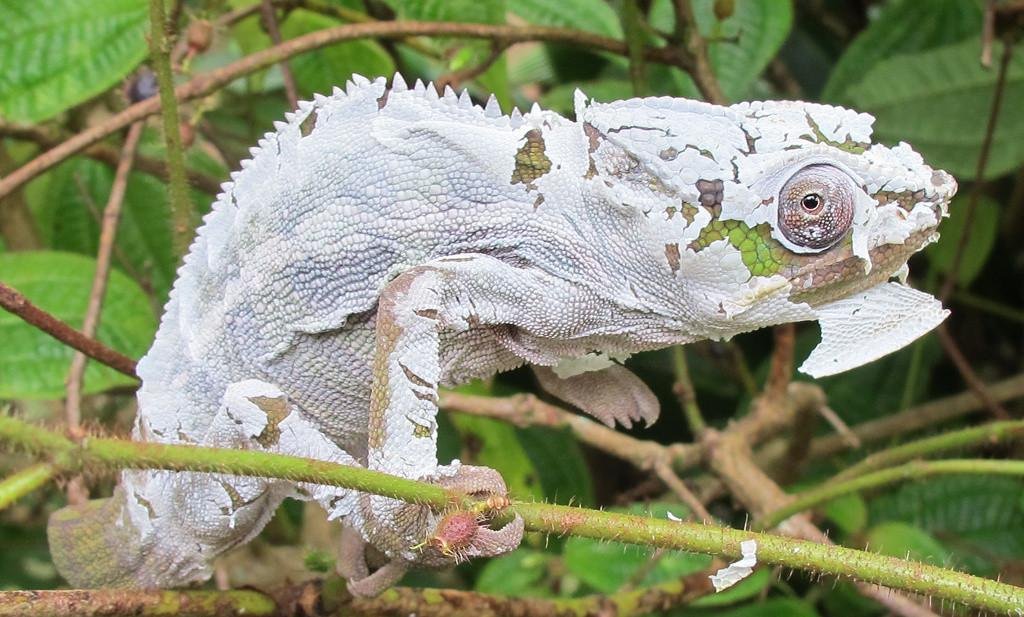
They shed skin in patches.
-
Some species have horns, casque-like crests, or ornamental frills.
-
They can move their eyes at different speeds simultaneously.
-
Females of many species are more colorful than males.
-
Most species live surprisingly short lives—2 to 5 years.
-
They’re more ancient than early human ancestors.
Frequently Asked Questions (FAQs)
Do all chameleons change color?
Nope! Some only shift between muted greens and browns. Others look like walking rainbows.
Are chameleons dangerous?
Not to humans. Their bite is tiny and rare.
How many species are in the chameleónovité family?
About 200 known species—though scientists occasionally discover new ones.
Why do chameleons change color—is it always camouflage?
Definitely not. They change color for communication, warming up, cooling down, and mood expression.
Can they survive in cold environments?
Generally, no. They rely heavily on external warmth and thrive in tropical or subtropical climates.
Conclusion: The Timeless Mystery of Chameleónovité
The world of chameleónovité is a kaleidoscope of biology, behavior, symbolism, and wonder. They’re quirky yet elegant, fragile yet fierce, reserved yet expressive. In every sense, they’re nature’s most charismatic oddballs—constantly surprising scientists and enchanting anyone lucky enough to spot one in the wild.
Their story isn’t just about color change. It’s about adaptation, patience, silent strength, and the unending mysteries of evolution. The more you learn about them, the more they defy expectations. And isn’t that the charm?
So next time someone mentions chameleons, you’ll have more than just a fun fact to share—you’ll have an entire mosaic of insight into one of nature’s most iconic shapeshifters.
If chameleons could read, they’d probably blush in gratitude.
About the Author
